Haircare routine for dry hair: our tips for taking care of your hair
Dry hair is fragile hair that requires special care and a gentle, tailored haircare routine. This helps to limit the consequences of dry hair: frizz that makes it look fluffy, difficulty brushing, the ‘straw’ effect, but also split ends and other problems encountered by hair that lacks moisture and nutrition. Here are our tips for establishing a special care routine for dry hair and regaining supple, shiny hair.
Updated on , validated by our team of René Furterer experts.
What causes dry hair?
Internal and external factors
Your hair may be dry because you produce too little sebum. Sebum is essential for healthy hair: along with sweat and water, it is the main component of the hydrolipidic film. This film envelops the hair and scalp, protecting them from foreign substances and regulating moisture while giving the hair its soft, silky appearance. Curly, frizzy and kinky hair is also naturally dry. Its spiral structure prevents sebum from travelling down the hair fibre to reach the lengths and tips. Note that the tighter the hair's spiral, the more difficult it is to distribute sebum evenly and the drier and more porous the hair becomes.
However, there are many other external reasons for dry hair:
- Environmental factors: sun, wind, chlorine, sea water, cold, heat and pollution are all external aggressions that dry out and weaken the hair.
- Aggressive hair treatments: colouring, bleaching and perms are chemical treatments that can damage the hair fibre. In addition, shampooing too frequently or using an unsuitable hair care routine can also have a negative impact on hair hydration.
- Heating appliances: used too often, hair dryers, straighteners and curling irons dry out and damage the hair.
How can you recognise dry hair?
Here are the signs that indicate dry hair:
- Your hair feels rough to the touch: you can feel it when you run your fingers through your hair.
- Your hair is dull: it lacks shine and lustre because the raised cuticles reflect less light.
- Your hair is difficult to detangle: it tangles and knots easily. In contrast, healthy hair is supple and brushes smoothly.
- Your hair is brittle: weakened hair breaks at the ends. You may notice a loss of hair density.
- Your ends are dry and split: the ends dry out and then split.
- Your hair is prone to frizz: these small hairs that stand out from the rest of your hair give it a fluffy appearance.
How can you moisturise and nourish dry hair?
What is the difference between moisturising and nourishing? Moisturising provides water to dehydrated hair, making it more supple and shiny. Nutrition, on the other hand, nourishes the hair fibre and makes it stronger. Dry hair, whether naturally dry or damaged by external factors, needs both hydration and nutrition.
Our tips for a special routine for dry hair
What daily hair care routine should you adopt to restore shine to your dry hair? You should opt for a routine that gently nourishes and hydrates both the scalp and the hair, with:
- A nourishing pre-shampoo treatment: if your hair is very dry, it may be a good idea to apply an oil treatment before shampooing. Leave it on for a few minutes or overnight to allow your hair to regenerate.
- A shampoo for dry hair: choose a gentle, sulphate- and silicone-free shampoo that moisturises dry hair and reduces frizz.
- A mask for dry hair: it is important to use a mask regularly (once or twice a week) to moisturise your hair. Apply it to the lengths and ends (focus on the ends if you have dry ends).
- A moisturising hair cream: the daily ally of dry hair, a leave-in cream should be used on towel-dried or dry hair to protect and moisturise the hair all while making it easier to style. Curly and frizzy hair can also benefit from a few drops of oil to seal in moisture and protect the hair fibre.
- Strength and Vitality Stimulating Concentrate - organic essential oils
HEAD SPA
Strength and Vitality Stimulating Concentrate - organic essential oilsRevitalizes - Regenerates - Strengthens hair


How often should you wash dry hair?
While it is important to wash your hair regularly to remove impurities, control sebum production and prevent scalp problems, washing too frequently can be harmful to dry hair. This can strip the hair of its natural oils, leaving it drier, duller and more brittle.
For dry hair, washing your hair once or twice per week is usually enough. Adjust the frequency to suit your lifestyle: if you exercise regularly or your hair is exposed to very dusty or polluted environments, you may need to shampoo more often. However, try not to wash your hair more than four times per week.
To help you space out your washes, consider using dry shampoo, which can freshen up your hair between washes, and hairstyles that can camouflage slightly dirty hair (such as braids or buns).
Finally, be sure to use a gentle shampoo and rinse your hair with lukewarm water, as water that is too hot can open the hair cuticles and cause moisture loss, while water that is too cold can be harsh on the scalp.
How can you dry and style dry hair without damaging it?
Opt for gentle drying techniques
Excessive use of heated styling tools is harmful to dry hair: the heat from hair dryers and straighteners dries out the hair, accelerating the evaporation of the water naturally present in the hair. This makes hair drier, duller and more brittle. You may even see split ends appearing.
Here are 5 tips for drying your hair without damaging it:
- Use a microfibre towel: this gently absorbs excess water. Pre-drying your hair in this way reduces the amount of time you need to use the hairdryer.
- Dry your hair gently: do not rub your hair vigorously with your towel (even if it is a microfibre one), instead pat it gently to avoid damaging it.
- Apply a heat protection product before using your heated styling tools: heat protection products protect the hair fibre from heat while making styling easier.
- Set your heated styling tools to the lowest temperature: this is a good way to avoid damaging your hair over the long term. Also, avoid holding the hairdryer too close to your hair when drying it, keeping it at least 15 centimetres away.
- Opt for air drying: air drying (even partial) will be gentler on your hair.

Adopt protective hairstyles
Certain hairstyles can protect dry hair from harsh weather conditions (cold, sun or wind) and also limit everyday friction that weakens the lengths and ends of your hair: this is the case with braids and loose buns.
Dry hair is more fragile, so be sure to style it gently:
- Opt for loose hairstyles that do not put excessive tension on the hair fibre.
- Moisturise your hair before styling it by applying a moisturising cream or oil.
- If your hair is exposed to the sun, don't forget to use sun protection for your hair in addition to your protective hairstyle.
- Use accessories that do not damage the hair: to create your protective hairstyles, choose spiral elastic bands and silk scrunchies that do not break the hair fibre.
How can you protect dry hair from external aggressions?
The sun
Excessive exposure to the sun can damage the hair cuticle and the hydrolipidic film that protects it (especially when combined with sea salt and chlorine from swimming pools). UV rays can also break down keratin, the fibrous protein that makes up 95% of the hair shaft. Finally, the sun can upset the balance of your scalp. The result? Drier, more porous and more brittle hair.
Fortunately, it is possible to protect dry hair from the sun with sun protection that’s for hair. This type of product prevents UV rays from penetrating the hair fibre. Apply it before going out in the sun and then throughout the day (as you would with sun cream for your face). Be sure to choose an effective product by referring to the KPF, the hair sun protection factor, which is the equivalent of SPF for the skin.
Pollution
Another external aggressor to which our hair is highly exposed is pollution. Dust, exhaust fumes and fine particles in the air settle on the scalp and hair, suffocating them. The hair fibre becomes more porous and the keratin scales spread apart. Pollution particles can even have a corrosive effect and reduce hair thickness. The scalp is not spared either: pollution dries it out and, in response, it produces more serum, which causes the hair to become greasy more quickly. Dandruff may appear. The hair loses its suppleness day by day and becomes increasingly dull, dry and brittle.
How can you protect your hair from pollution?
- Use an anti-pollution treatment to limit damage to your hair. These treatments coat your hair and scalp with a protective film that prevents pollution particles from settling.
- Detox your hair regularly. Once a week, you can add a purifying hair scrub to your routine to deeply cleanse your hair and restore it to full health.
How can you prevent frizz and split ends?
Frizz
We call frizz those little flyaway and unruly hairs that can make styling difficult. It is more common in curly, wavy or kinky hair, but can affect all hair types. Frizz is linked to a lack of moisture: the hair cuticles lift up in an attempt to capture moisture in the air, which in turn causes frizz. It can therefore appear when your hair is exposed to humidity or dryness. External aggressions (particularly the use of heated styling tools) can aggravate frizz.
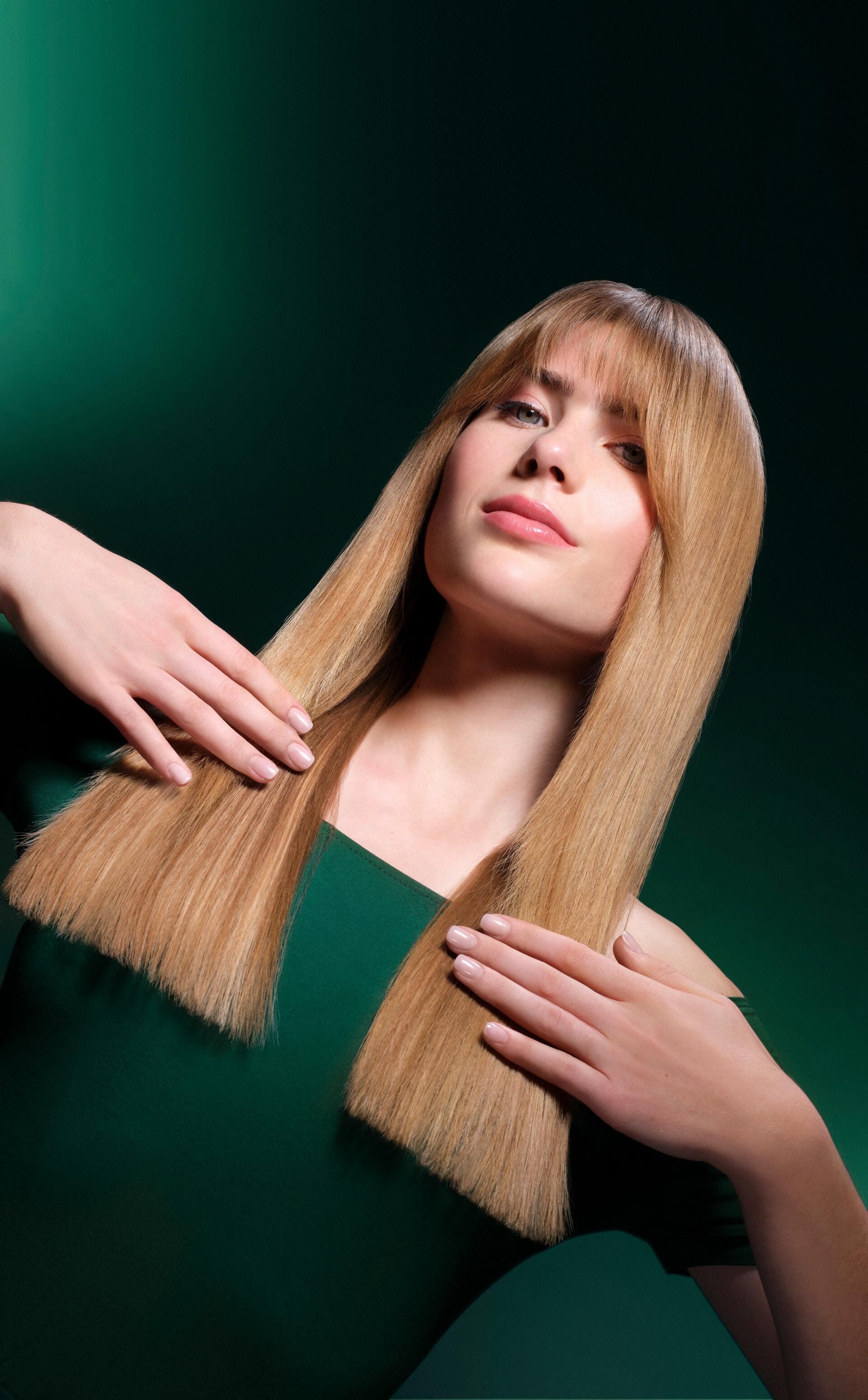
How can you combat frizz? First of all, it is important to adopt a suitable hair care routine: choose a smoothing shampoo and conditioner, and to keep your hair hydrated on a daily basis, don't forget to apply a moisturising treatment or hair oil to make it smoother.
Split ends
Keep in mind that the ends are the oldest and most fragile part of the hair shaft. Split ends are quite common: they make the hair look like it's dividing at the ends. They are a sign of dry, damaged hair. Split ends cannot be repaired, so it's important to take action before they form.
How can you prevent split ends? Your hair care routine should be gentle and focus on hydration. Start with a gentle shampoo before applying a moisturising or nourishing mask (ceramide-based masks are very effective at boosting hydration and protecting the hair). Add a daily smoothing cream to nourish and facilitate styling, as well as a special repair serum for split ends to repair, protect and fill in gaps.
Hydration from within and nutrition
While hair hydration requires an effective hair care routine, it also depends on the amount of water you drink every day. It is important to drink enough water throughout the day to ensure your hair is hydrated from within. ANSES (the French Agency for Food, Environmental and Occupational Health & Safety) recommends drinking between 1.5 and 2 litres of water per day.
A balanced diet also contributes to healthy hair. Certain foods are particularly beneficial for hair. These include:
- Oily fish, which contains essential fatty acids such as omega-3, which promote healthy hair hydration.
- Eggs, which contain protein as well as B vitamins (including B5 and B8, which are useful for hair growth and strengthening).
- Legumes, which contain iron, an essential trace element for strengthening and nourishing hair.
- Seafood, which is particularly rich in zinc, which contributes to keratin synthesis.
- Carrots, which are a good source of vitamin A, a vitamin that is beneficial for dry hair as it stimulates sebum production.