
Dry coily hair: how to care for and hydrate it?
Coily hair has tighter curls than curly hair and is drier and more fragile. Dry coily hair feels coarse to the touch, brittle, and dull… The curls themselves are less defined, developing knots and frizz. To regain shiny, bouncy, and healthy coily hair, here are our tips for adopting the right care routine and techniques.
Updated on , validated by our team of René Furterer experts.

What are the differences between coily hair and curly hair?
Curly hair and coily hair are often confused. Both are textured hair types, but they do not have exactly the same needs.
How to distinguish between the two?
- Curly hair: The curls of curly hair form (more or less) large corkscrews, and are softer. When wet, the hair stretches more easily, becoming almost straight, and curls again when styling products are applied, or when it is drying.
- Coily hair: The curls of coily hair form tighter corkscrews and wrap around themselves. Coily hair is generally drier, more fragile, and more brittle than curly hair.
How to distinguish between hydration and nourishment?
Hydration provides water to the hair and makes it more flexible and bouncy. Curls form more easily, and the hair is shinier, and easier to detangle. Nourishment, on the other hand, feeds the hair. The hair fibre becomes stronger, less prone to breakage, and more resistant to external damage. How to recognise hair that lacks nourishment? It becomes brittle, split ends appear, and curls become less defined.
To nourish the hair fibre, opt for deep-nourishing treatments with ingredients such as shea butter or argan oil. A nourishing mask can be applied weekly. A nourishing oil treatment can be applied, either as an overnight pre-shampoo, or daily as a leave-in, for shinier hair.
Coily hair needs hydration and nourishment.

Signs of dehydration
How to recognise hair lacking hydration? Certain signs are unmistakable:
- Hair coarse to the touch: dry coily hair can look like hay and lack shine, to regain softness, it is essential to hydrate it. Apply a hydrating mask once a week. Also, avoid harsh products and techniques. Daily use of a hydrating cream for coily hair can be beneficial.
- Undefined curls: on hair lacking hydration, curls have difficulties forming. For beautiful curls, you can use styling products suited for coily hair. A styling cream, a curl-activator spray or a detangling balm suited for coily hair can help with styling, protection, and hydration.
- Frizz: These are small hairs that stick out from the rest of the hair. The result? Hair that looks puffy. To prevent frizz, use a hydrating product that will facilitate styling, add shine, and strengthen your hair.
- Knot formation: Dehydrated coily hair is more prone to knots. Be sure to gently detangle your hair when it is still wet or damp, with a wide-tooth comb or your fingers. Using a conditioner, hydrating mask, or styling cream can make the process easier.
For beautiful coily hair, hydrating the scalp is also important.
Causes of dryness in coily hair
Why is coily hair naturally dry?
To understand why coily hair is naturally dry, we need to look at sebum. Sebum, produced by sebaceous glands, is essential for hair health as it forms the hydrolipidic film. This film covers the scalp and hair shaft, protecting them from external aggressions, helping regulate hydration, and giving the hair a silky appearance. However, on coily hair, which grows in tight spirals, the sebum cannot reach the lengths and ends, and so, cannot nourish the hair fibre. Moreover, the scales on coily hair do not benefit from the smoothing action of sebum, and as they remain open, they cannot retain water within the hair: the lengths become more easily dehydrated.
External causes of dryness in coily hair
The internal causes mentioned earlier are not the only ones responsible for dryness in coily hair, other external factors can exacerbate the issue:
- Harsh chemical treatments: colouring, bleaching, and also harsh styling products can damage and weaken the hair fibre. Coily hair then becomes dehydrated more quickly. Limit the use of these products, if possible.
- “Traumatising” styling techniques: the use of styling tools (hairdryers, straighteners) further weakens coily hair. Be cautious with vigorous brushing. It is advised to handle coily hair gently: opt for air drying and detangle carefully with a wide-tooth comb.
- Environmental factors: pollution, UV rays, wind, seawater and pool water have a drying effect on both the scalp and the hair shaft. Protect your coily hair with hats, protective hairstyles, and appropriate products.
How to prevent breakage and split ends in coily hair?
How to detangle coily hair without causing damage?
Detangling is a delicate process for coily hair and requires a gentle approach:
- Detangle when wet or damp: detangling is gentle when the hair is wet or damp, helping minimise breakage. Between washes, mist your hair with a spray bottle before detangling.
- Detangle gradually: to avoid damaging the hair fibre, do it gradually. Divide your hair into sections, then work your way up from the ends to the roots: start by removing knots at the tips before moving upward.
- Never force it: it is crucial to take your time when detangling coily hair. Avoid harsh movements.
- Proceed after applying a mask, conditioner, or leave-in cream: these hydrating treatments will make detangling coily hair easier.
- Use accessories suited for coily hair: to detangle coily hair, use a wide-tooth comb, a suitable brush, or your fingers.
5 tips to minimise breakage
In addition to gentle detangling, you can adopt certain daily habits to minimise breakage in your coily hair:
- Hydrate and nourish the hair: it is essential to provide coily hair with the hydration and nourishment it needs. Use a daily leave-in hydrating treatment to care for your lengths. Apply a suitable hair mask at least once a week.
- Be cautious of heated tools: avoid using hairdryers or straighteners too often. Set them on the lowest temperature and, whenever possible, prefer air drying your hair. A thermoprotector spray can also help limit the damage caused by heat.
- Avoid harsh products: straightening, colouring, or bleaching can damage the hair fibre. Care for your coily hair before resorting to any of these treatments. Note that plant-based dyes are gentler than chemical ones.
- Trim the ends regularly: make sure to trim off a few centimetres of your hair regularly. This will remove damaged and split ends and help you start fresh.
- Avoid overly tight hairstyles: tight braids and ponytails can contribute to the breakage of coily hair.
Solutions to combat dryness in coily hair
How to protect coily hair at night?
Coily hair can suffer overnight. Upon waking up in the morning, you may notice flattened curls, knots, and frizz... Fortunately, there are solutions to ensure coily hair gets a good night’s rest:
- Silk or satin pillowcases: on a regular cotton pillowcase, coily hair is weakened by friction. In contrast, silk or satin provides friction-free nights. Silk does not absorb moisture in your hair, does not catch the curls, which remain bouncy in the morning, and helps prevent static electricity.
- Protective hairstyles for the night: Some hairstyles help protect coily hair overnight. When used in addition to a silk or satin pillowcase, they effectively reduce friction on the pillow.
- Accessories to use: to create your protective hairstyle for the night, make sure to use spiral hair ties or silk scrunchies, which won’t break your curls unlike regular hair ties. Coily hair can also benefit from wearing a satin bonnet for a peaceful night’s sleep.
Benefits of protective hairstyles
Protective hairstyles such as braids have many benefits for coily hair:
- Protecting coily hair from external aggressions: protective hairstyle can shield your curls from cold or sun exposure. Take this into account when planning a trip to the mountain or seaside.
- Caring for coily hair: a protective hairstyle allows for longer oil treatments effectively nourishing the hair.
- Limit friction on coily hair: coily hair is weakened by the daily friction from clothing or pillowcases. A protective hairstyle helps limit the damaging effects of friction, both day and night.
What type of protective hairstyle to adopt for coily hair? Some hairstyles are quick and easy to create and particularly suited for nighttime (like the “pineapple” hairstyle, a ponytail at the top of the head), while others can be more intricate (such as braids or buns). A protective hairstyle should, however, not be too tight to avoid weakening the hair fibre.
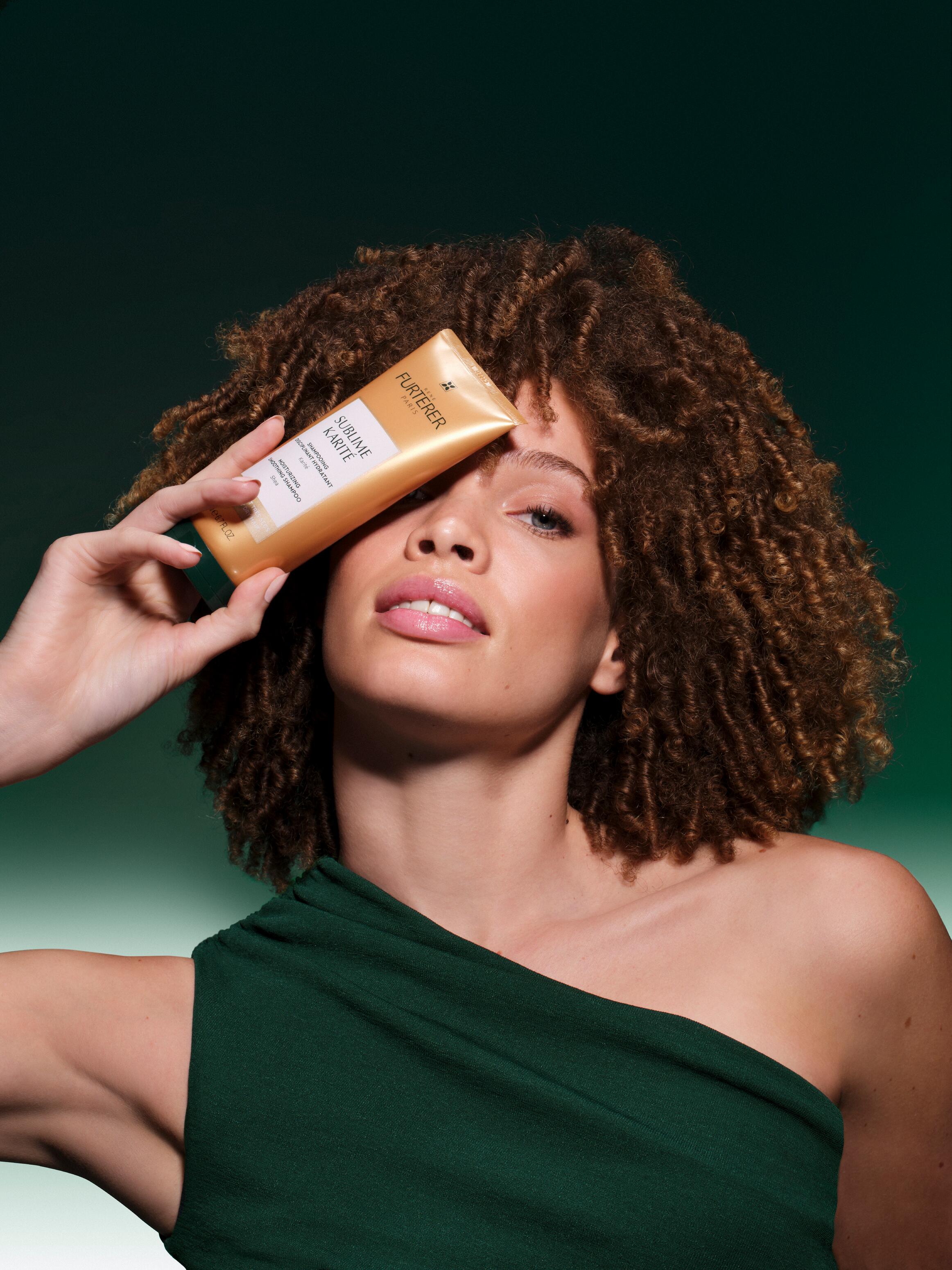
Haircare routines for coily hair by season
Coily hair is sensitive to climate fluctuations. Adjust your haircare routine according to the seasons:
- What treatments to protect coily hair from the sun and heat? During summer, UV rays and high temperatures contribute to drying out coiled hair. To prevent this, it is essential to provide daily hydration using a leave-in moisturising cream. A nourishing hair oil can also protect your curls from the sun, salt, or chlorine. At the end of the day, after swimming in the sea or a pool, remember to rinse your hair with clean water. Lastly, applying a hydrating mask once a week will be beneficial.
- What treatments for coily hair to combat the cold and dryness? During winter, the wind and freezing temperatures can make coily hair drier and more fragile than usual. It is important to care for your scalp: opt for a gentle, hydrating shampoo, and do not hesitate to perform regular massages to stimulate blood circulation. Also, take care of your lengths using a nourishing oil. Apply a few drops daily to seal in moisture and protect the hair fibre from external aggressions. Every two weeks, consider doing an oil treatment overnight before washing your hair. You can also use a daily hydration cream, and once a week, a hydrating mask.