
Dry hair shampoo: tips for hydrating and caring for your hair
Washing is the foundation of a good hair care routine, and for dry hair, choosing the right shampoo is essential. Using the wrong shampoo and employing overly aggressive techniques can unbalance, weaken, and dry out both your scalp and hair shaft. Which shampoo to choose for dry hair? Which ingredients to prioritise to meet the needs of dry, damaged hair? Here are some tips to regain soft, shiny hair with a suitable shampoo and hair care routine.
Updated on , validated by our team of René Furterer experts.
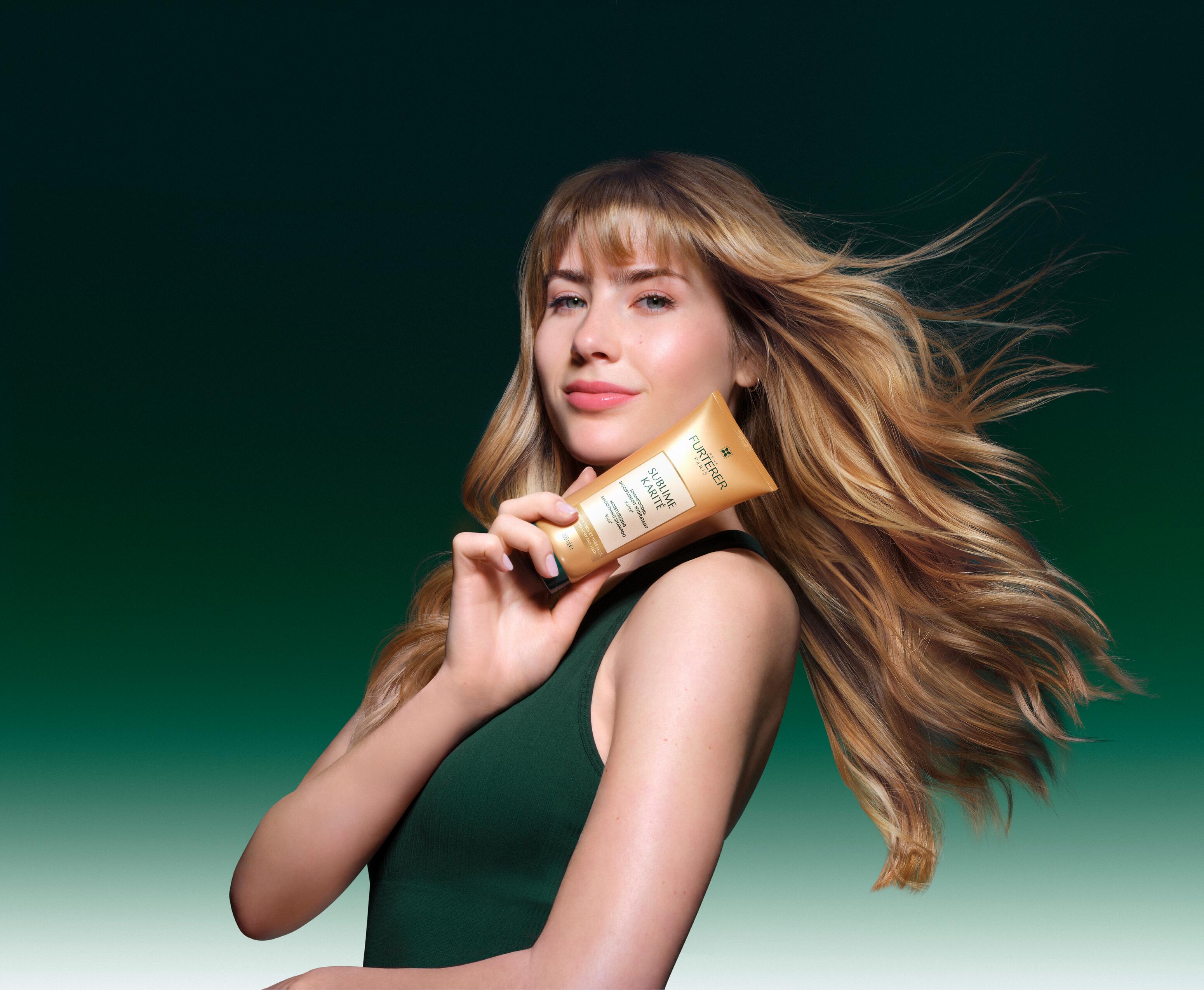
Taking care of your hair with a shampoo
A gentle cleanse for healthy hair
The main product of any hair care is shampoo: its role is to clean the hair of all grime and remove sebum produced by the scalp’s sebaceous gland. In excess, sebum greases the hair, makes it look dirty, and can even contribute to scalp irritation. However, sebum is crucial to hair health as it, along with water and sweat, forms the essential component of the hydrolipidic film. The purpose of this film is to envelop the scalp and hair shaft, protecting them and regulating hydration. However, a lack of sebum or a disruption in the hydrolipidic film is often the cause of dry hair.
You should choose a shampoo that will gently clean the scalp and hair shaft, without a stripping effect. Opt for a shampoo that does not contain sulfate-based surfactants. Sulfates, contained in numerous shampoos, are enjoyed for their foaming and cleansing properties. But they irritate and dry the scalp and hair shaft. Opt for shampoos with naturally sourced, plant-based surfactants.
Integrating shampoo into a care routine
Shampoo is more than a cleanser; it acts as a treatment. Some shampoos can:
- Hydrate and nourish the hair,
- regulate sebum production,
- stimulate hair growth,
- define and soften curls,
- treat dandruff,
- enhance shine.
However, it is essential to choose a shampoo suited to the nature of your scalp and hair type. Using an unsuitable shampoo can damage the scalp, dry the hair, and lead to greasy hair, dandruff, dullness, or even hair loss.

How to choose the right shampoo for your dry hair?
An efficient dry hair shampoo provides hydration, nourishment, and protection. To achieve this, you need to look closely at your shampoo’s composition. Some ingredients are highly recommended to regain soft and healthy hair :
- Shea: Shea butter is a crucial asset for dry hair care. Full of essential fatty acids, it deeply nourishes the hair. It contains vitamins A and E, which have antioxidant properties; karitenes, effective UV protectants, and triterpenic alcohols, which are known for their anti-inflammatory benefits.
- Argan oil: used for centuries by Berber women, argan oil is rich in essential fatty acids (omega-6), and vitamin E. It is protective, hydrating, nourishing, and is effective in restoring the hydrolipidic film of dry, very dry, and damaged hair.
- Castor oil: full of essential fatty acids (mainly omega-9 and 6), castor oil deeply nourishes, hydrates, and protects the hair. Moreover, It helps purify the scalp while stimulating micro circulation thanks to its anti-inflammatory and antibacterial properties.
- Plant keratin: extracted from plants such as soy or wheat, plant keratin, rich in amino acids, helps restore the hair fibre and maintain hair health. Plant keratin fills the gaps in the hair cuticle and even rebuilds damaged keratin chains within the hair.
Adopting a suitable hair care routine
How often should you wash your dry hair?
To avoid depriving them of the protective and nourishing sebum that it often lacks, make sure to not wash your hair too frequently. Washing too often can actually make the hair drier, duller, and more brittle. The scalp may also, in response, produce more sebum, leading to an imbalance and a combination of oily roots and dry ends.
It is therefore better for dry hair to space out washes: 1 to 2 washes per week are generally recommended. Note that you can adapt this routine to your environment: practicing sports regularly, or frequenting highly polluted areas, may require more frequent washes.
4 tips to space out hair washes
- Brush your hair: properly brushing your hair helps distribute sebum along the lengths, and removes impurities and pollution particles that accumulate in your hair every day. However, remember to clean your brush regularly.
- Opt for disguising hairstyles: some hairstyles can help conceal slightly dirty hair. This is the case with braids and buns.
- Adopt dry shampoo: Ideal to refresh your hair without washing it with water, dry shampoo absorbs excess sebum and impurities while texturising the hair in just a moment.
- Use a purifying scalp scrub: once a week, you can use a product to get rid of the more tenacious impurities and unclog the pores of your scalp. Your hair then becomes oily more slowly, allowing you to space out your washes more easily.
Best practices to wash your hair without drying it out
To properly wash your hair without damaging the hair fibre, it is important to adopt the right techniques:
- Before shampooing, brush your hair to detangle it, close the cuticles, remove grim, and get rid of dead hair.
- Wet your hair, then apply shampoo to the tip of your finger before placing it on the scalp.
- Then, massage gently without scrubbing. You should wash the scalp, not the lengths.
- Rinse. This is when the foam created during the scalp massage will slide down the hair fibre and clean it. Use lukewarm water, as too hot water can open the cuticles and lead to moisture loss, similarly, water that is too cold can irritate the scalp.
- Dry your hair gently. Be cautious when drying your hair, as this can be a potentially damaging step. The heat from a hairdryer can weaken and dry out the hair fibre. To minimise damage, apply a thermoprotective treatment to your hair, set your device at the lowest temperature, and opt for air drying when possible.
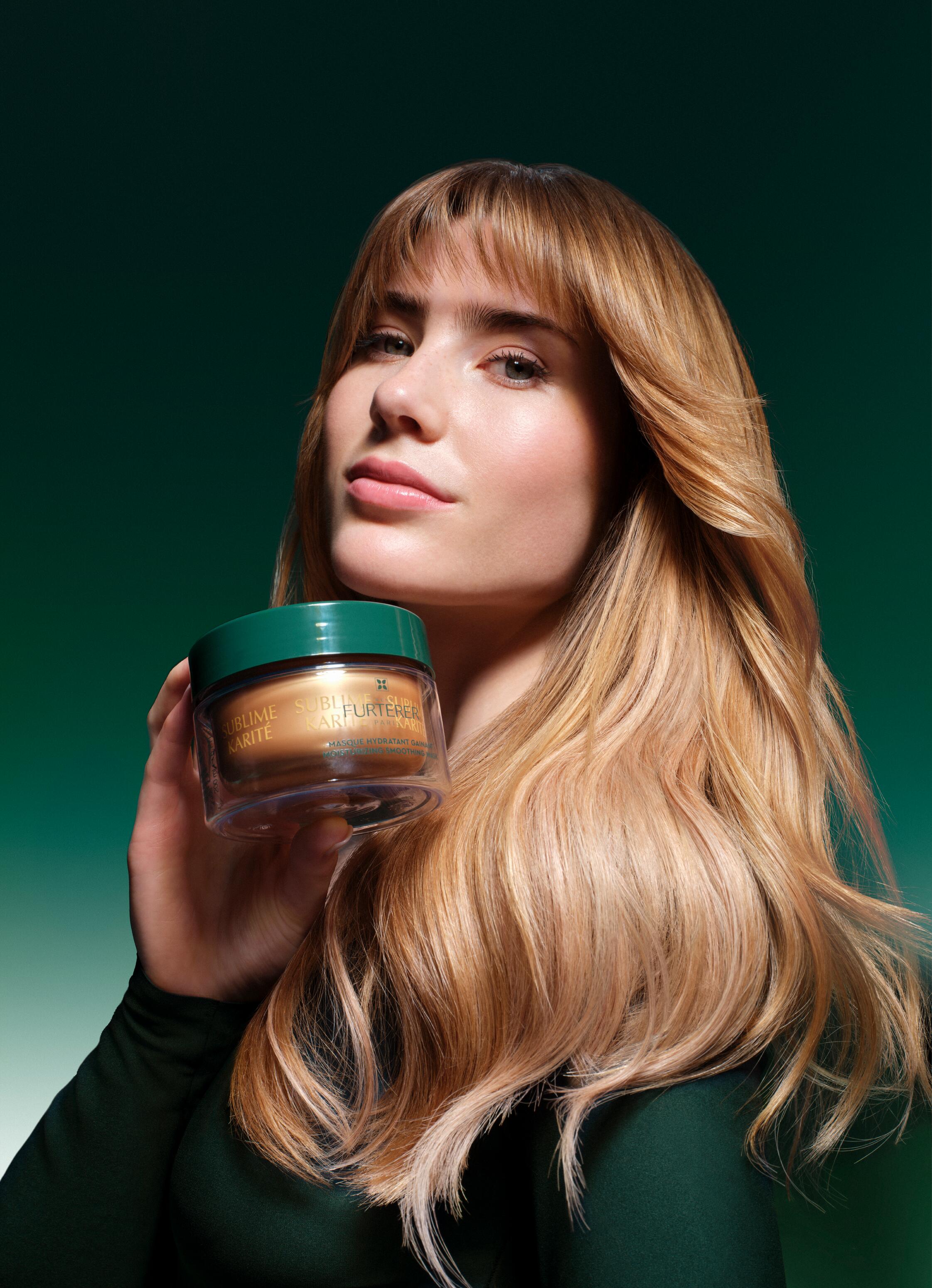
Masks or conditioner, which one to choose for dry hair?
After shampooing, a conditioner or a mask are good additions to care for dry hair. But what is the difference between these two products? How can you incorporate them into your dry hair routine?
Conditioner (or after-shampoo) is applied, as expected, after each shampoo. A small amount of product is applied to the entire towel-dried hair, left on for 1 to 2 minutes, then detangled and rinsed. Conditioner helps detangle, hydrate, protect, and add texture and shine to dry hair.
A hair mask, on the other hand, works more deeply and aims to restructure the hair fibre, repair and nourish dry hair. It should be added to your routine once a week. After shampooing, apply a generous amount of product to towel-dried hair. Leave it on for a few minutes (the longer the exposure time, the better, especially if your hair is dry). Detangle and rinse. There are both hydrating and nourishing masks. The former provides moisture, while the latter offers nourishment. Choose the formula that best addresses your hair’s needs.