Dry hair during the menopause: symptoms, causes and solutions
During the menopause, hair becomes more fragile. Hormonal changes have an impact on the health of women's hair: it becomes drier, finer, more brittle and, in some cases, thinner. Fortunately, these symptoms are not inevitable, as long as you change some of your habits and take care of your hair.
Updated on , validated by our team of René Furterer experts.
Causes of dry hair during the menopause
Hormonal changes
The menopause is a period of hormonal changes that can sometimes be difficult for women to cope with. Menopause refers to the end of the ovarian cycle and occurs around the age of 50. While the most obvious symptom is the permanent cessation of menstruation, many others appear: weight gain, mood swings, hot flushes, night sweats, brain fog, drier skin, joint pain, but also finer, drier hair and even hair loss.
How can we explain why hair is affected by these hormonal changes? Several phenomena are intertwined:
- The decline in female hormones, oestrogen and progesterone, benefits another hormone, testosterone (a male hormone). The latter accelerates hair loss. This is followed by an imbalance in the hair cycles: the hair is less vigorous than before.
- The microcirculation of the scalp is less effective: the roots are less well nourished, hair growth is slowed and sebum production decreases. No longer benefiting from the protective and moisturising action of sebum, the hair fibre is drier, finer and more brittle.
External factors
During the menopause, hair also becomes less resistant to external aggressions. There are many of these and they contribute to hair dryness:
- Environmental factors: UV rays, pollution, sea salt and chlorine from swimming pools can weaken the hair. The cuticles separate, allowing the hair's natural moisture to escape. Hair becomes duller and drier.
- Use of heated appliances: Hairdryers, straighteners and curling irons can contribute to drying out the hair fibre. The heat (often unadjustable) from these appliances removes the natural oils and moisture from the hair. Excessive use makes hair dry and brittle. Split ends may appear.
- Aggressive treatments: certain hair treatments can worsen the condition of hair that is already more fragile during the menopause. This is the case with colouring and bleaching, but also with unsuitable and overly harsh treatments. These can damage both the hair and the scalp.
The right steps to take to care for your hair during the menopause
Adapt your hair care routine
During the menopause, opt for a gentle hair care routine! Reduce the frequency with which you wash your hair: it is generally recommended not to wash dry hair more than once or twice a week. Washing your hair too often can dry it out, especially when sebum production is reduced.
Choose a suitable silicone-free shampoo to coat the hair from root to tip.
To take care of your hair during the menopause, you need to provide moisture: it is important to moisturise your hair, but also to moisturise your scalp. Although often neglected, the scalp is essential for healthy hair. So be sure to incorporate moisturising and smoothing treatments into your hair care routine to compensate for the lack of sebum and the changes your hair is undergoing:
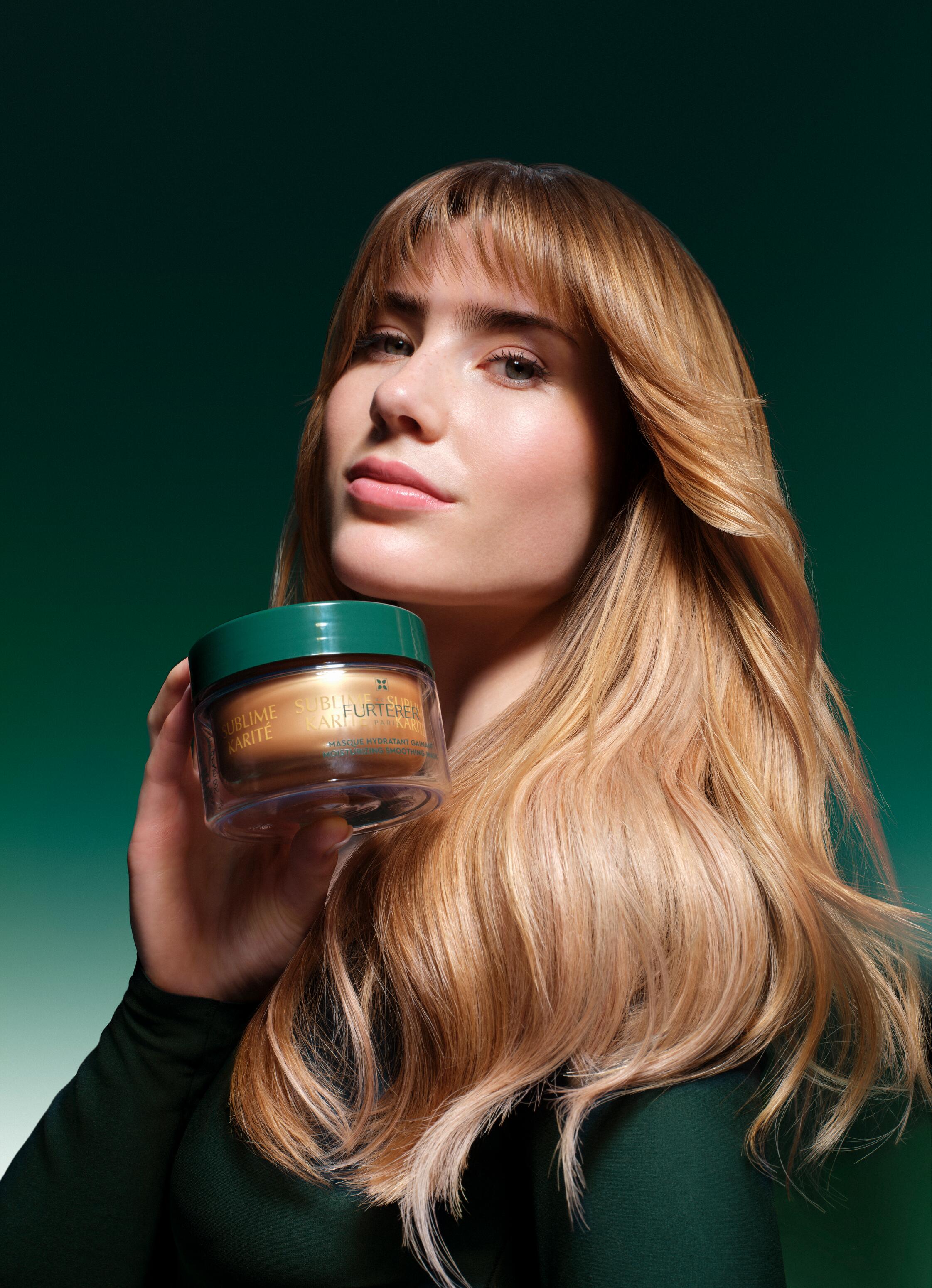
- A mask suited to your needs. Depending on the condition of your hair, choose a moisturising or nourishing mask. Apply to the lengths once a week, leave on for a few minutes and then rinse thoroughly.
- A serum that moisturises and protects your hair and scalp. Apply to the scalp, section by section, after shampooing. This type of product does not need to be rinsed out and plumps the hair without weighing it down.
- A leave-in moisturising cream. Use daily to protect, moisturise and style dry hair.
Note that during the menopause, in addition to becoming drier, hair becomes finer and loses density, so it is important to choose products that provide light hydration without weighing hair down. An ingredient such as plant-based hyaluronic acid is perfect for this!
Limit damage
Rest assured, you can prevent your hair from becoming drier during menopause by taking a few small steps every day.
- Reduce the use of heated appliances: limit the use of hair dryers and other straighteners, as heat has a damaging effect on dry hair. Leave your hair to dry naturally as much as possible. When this is not possible, remember to pre-dry your hair by dabbing it with a soft towel, use a heat protection product and set your appliance to the lowest temperature.
- Avoid frequent chemical colouring: try to space out the use of chemical dyes. Consider gentler, plant-based alternatives.
- Adapt your brushing techniques: brushing is very beneficial for dry hair as it closes the cuticles, providing protection and ensuring shine. It also helps to distribute sebum along the length of the hair and remove impurities and pollution particles that can weaken the hair. To avoid being counterproductive, brushing should be gentle. Always start by brushing the ends before working your way up to the roots. Avoid touching the scalp too much with the brush. Finally, one last tip: clean your brush thoroughly once a week and be sure to use a suitable brush if you have curly or frizzy hair.
The role of diet and vitamins
A balanced diet is essential at all ages. During the menopause, certain vitamins that are beneficial for hair should be prioritised:
- Vitamin A is found in offal and in many fruits and vegetables (sweet potatoes, carrots, spinach, squash and apricots). Vitamin A stimulates sebum production, helping to protect and moisturise both the scalp and hair.
- B vitamins are found in poultry, dairy products, eggs, whole grains, tomatoes, pulses and brewer's yeast. B vitamins contribute to healthy hair: they stimulate the production of keratin, a protein that makes up 95% of the hair shaft, promote growth and prevent hair loss.
- Vitamin E is found in almonds, hazelnuts and avocados. It has antioxidant and moisturising properties that are very beneficial for hair. Vitamin E slows down the ageing process, promotes growth and strengthens the hair fibre.
In addition to a varied and balanced diet, you can take dietary supplements and use anti-hair loss treatments to help strengthen dry hair.