What if we told you that you can soften the appearance of your white hair permanently and without damage with a natural colour made with organic active ingredients? Effective for white or greying hair, a plant-based colour treatment allows you to restore a brilliant, natural colour while protecting your hair from external aggressors.

What is plant-based colouring?

Plant-based colouring is a dyeing technique using 100% natural active ingredients which do not attack the hair or scalp. Unlike chemical hair colour which penetrates the hair and destroys its original pigment, plant-based colour sets around the hair fibre, superimposing itself over your natural colour. The hair is permanently coloured. It has natural, shiny highlights that vary in shade depending on the hair's characteristics.

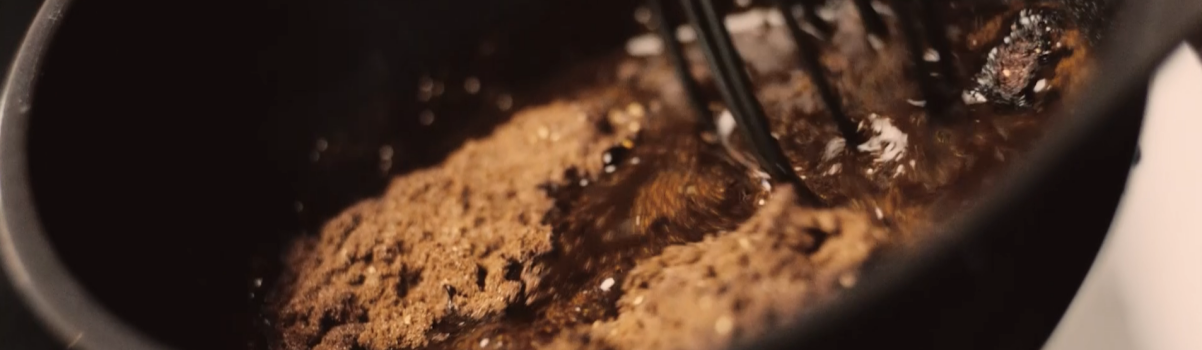
rf_ivive_coloration-vegetale_texture

Is plant-based colour effective at concealing white hair?

Plant-based colouring is ideal for white hair as it offers a very natural finish. This is a "tone on tone" colour that is superimposed over the hair colour to give it a darker shade. If you have between 30 and 50% white hair, plant-based colour will soften the appearance by creating a shade very close to your original colour. Some shades, such as auburn, can even cover hair that is up to 70% white!

No more "root effects" during hair growth

Plant-based colour is known as a surface colour as it does not penetrate the hair but works like a filter on your original colour. When the hair grows back, the edges are much less visible than with chemical colouring. The result is very natural with no “root effect” when white hair resurfaces after a few weeks.

Plant-based colouring: the ally of white hair

With age, the scalp produces less and less melanin (the pigment that colours the hair). It also receives fewer nutrients which strengthen the hair fibre. This results in white and increasingly fragile hair so using a chemical colour with aggressive active ingredients is not really recommended.
 

RF_Ivive-coloration-vegetale-blond- karoline-blond-dorepur-0-3_double

Plant-based dyeing, on the other hand, preserves the structure of the hair and strengthens the hair fibre by enveloping it in a coloured sheath. More than a cosmetic procedure, it is an effective treatment that protects your hair on a daily basis. Plant-based colours contain natural active ingredients, such as henna leaf extract and sorghum leaf extract.

Can I use a plant-based dye after a chemical colour?

As the first white hairs appear, many people turn to chemical colouring. Is it too late to switch to plant-based colour if the hair is already coloured with a chemical dye?
No, quite the opposite! IVIVE plant-based colour is fully compatible with chemical colour. It will even help your hair to regenerate following the damage caused by aggressive pigments.
Your colourist will examine your hair to decide which shade will look most natural based on your current colour, your natural colour and the amount of white hair you need to cover.

How do you colour white hair with IVIVE plant-based colour?

An IVIVE plant-based colour treatment must be carried out by a René Furterer trained hairdresser. They will first make a diagnosis to choose the right shade and apply the colour effectively to each area of your hair. For optimal colouring, some areas may require a higher concentration of product than others. 
Here are all the steps in an IVIVE organic plant-based colour treatment: 

1. Hair diagnosis

The colourist will examine your hair to determine the percentage of white hair and the intensity of your natural colour. They will then suggest the most appropriate shade for a natural look. The more white hair you have, the more intense the result will be in terms of highlights as plant-based colour works by superimposing itself over your original colour.

2. Clay shampoo

Before applying the plant-based colour, the hairdresser will prepare your hair. The CURBICIA clay shampoo removes hair product residue and any other impurities that may have accumulated in your hair. It causes a slight opening in the hair fibres, which allows the colour to set more easily. 
 

3. Plant-based colouring

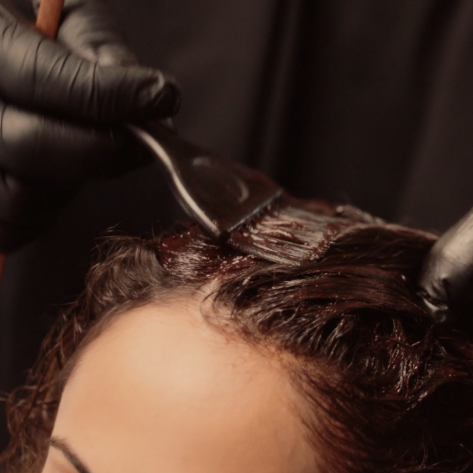
Your hairdresser will mix the powdered plant extracts with a little hot water to form a dye gel and apply it to your roots and lengths. They will use a different concentration depending on the target area.

rf_ivive_coloration-vegetale_pose

4. Applying the colour

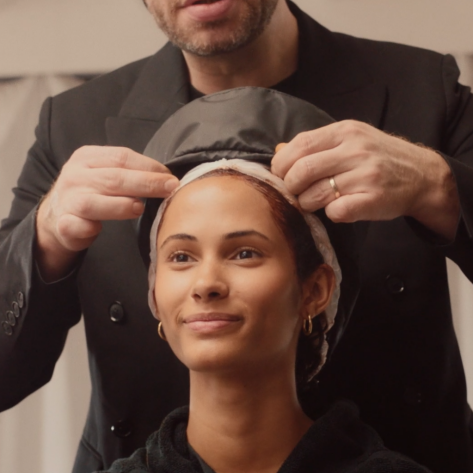
The application time for IVIVE plant-based colour is very short: just 30 to 45 minutes under a heated cap to give your hair natural, intense highlights.

rf_ivive_coloration-vegetale_bonnet

5. Rinsing

Then it's time to rinse out the dye gel and apply a treatment to your hair, such as the OKARA COLOR mask, to help set the colour and protect the hair fibre.

6. Oxidation

Once you leave the salon, the plant extracts will oxidize for 48 hours before the colour stabilises. For example, some of the coppery highlights created by the henna will fade to the chosen shade. This is why you should wait two days before shampooing your hair (even with a dry one) after a plant-based colour treatment. 

7. Maintenance

To maintain your natural colour, use a mild, sulphate-free shampoo to avoid damaging the colour attached to the surface of your hair. We recommend OKARA COLOR shampoo, which is designed to optimize colour retention on the hair while protecting the hair fibre.

8. Touch-ups

Four weeks after the first plant-based colour treatment, it is advisable to return to the salon for a touch-up of the white hair and roots. The hair is strengthened with each colour treatment, resulting in a longer and longer lasting colour. At this point, you can leave five to six weeks between appointments.

MORE ON THIS TOPIC

Can you colour your hair when you are pregnant?

OUR PLANT-POWERED HAIR DYES DESIGNED FOR YOU

ADDITIONAL ARTICLES